
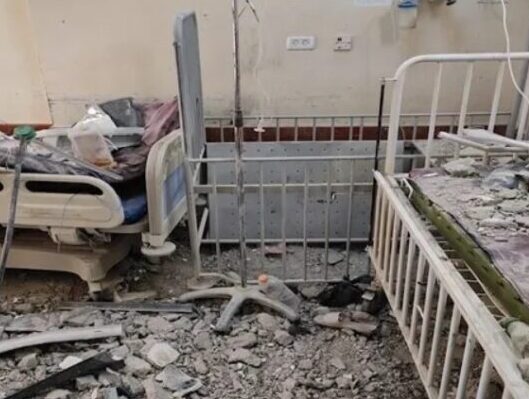
The World Health Organization (WHO) says rebuilding Gaza’s shattered health system will require an estimated $10 billion over five years, reflecting the scale of destruction inflicted on medical infrastructure during two years of Israeli military operations.
Dr. Renheld Van de Weerdt, WHO’s representative for Palestine, said the estimate includes reconstruction, restoring medical services, and addressing sharply rising health needs, especially among children and people living with permanent disabilities such as paralysis and limb amputations. She noted that large‑scale psychological support will also be essential.
According to WHO assessments, more than 1,800 health facilities—including major hospitals like Al‑Shifa, as well as primary‑care centers, clinics, pharmacies, and laboratories—have been damaged or destroyed.
|Israeli Strikes Kill 13 Palestinians in Gaza on Friday|
Van de Weerdt said displaced Palestinians living in shelters face increasingly harsh conditions, including widespread rodent and pest infestations, based on field assessments covering more than 1,600 sites. These conditions affect an estimated 1.45 million people out of Gaza’s 2.4 million residents.
More than 80 percent of shelters have reported outbreaks of skin diseases such as scabies, lice, and bedbugs, driven by overcrowding and collapsing sanitation systems.
Israeli forces have killed 12 Palestinians, including six police officers, in multiple attacks across Gaza.
Despite a six-month long ceasefire, Israeli forces are committing daily violations that have killed almost 1,000 people. pic.twitter.com/0SljKtzEc6
— Al Jazeera English (@AJEnglish) April 25, 2026
Speaking to reporters in Geneva, Van de Weerdt said direct damage to the health sector alone is estimated at $1.4 billion, with more than 1,800 facilities either partially or completely destroyed.
She added that most Palestinian families remain displaced, living in tents amid rubble and relying almost entirely on humanitarian aid to meet basic needs.
Local medical and municipal reports also point to a sharp rise in insects and rodents across the Strip, fueled by the collapse of infrastructure, large accumulations of debris and waste, and the spread of untreated sewage around displacement sites.
Municipalities say they cannot carry out pest‑control operations due to a lack of pesticides and essential materials, which Israel continues to restrict as “dual‑use,” according to Gaza Municipality spokesperson Husni Mehanna.
Munir Al‑Shakhreet, an emergency medicine consultant at the Shifa Medical Complex, said the hospital has been receiving a growing number of patients suffering from rodent bites, underscoring the worsening environmental conditions.
يا الله كل هذا القهر!! pic.twitter.com/JDfJ0YIKVq
— Dr. Zaid Alsalman (@dr_zaid) April 24, 2026
These assessments highlight severe environmental and public‑health risks facing Gaza’s population, raising concerns about potential large‑scale disease outbreaks as basic services continue to collapse.
Despite the ceasefire that took effect on 10 October 2025, living and health conditions in Gaza remain dire. Local authorities say Israel has not fulfilled key obligations under the agreement, including opening crossings and allowing agreed‑upon quantities of food, medical supplies, and shelter materials into the Strip.
The ceasefire followed two years of Israeli military operations that began on 8 October 2023, which have killed more than 72,000 Palestinians, injured over 172,000, and caused widespread destruction affecting 90 percent of civilian infrastructure, according to local and international assessments.
